
Tesla × IKEA
1 Week 2026
This project explores a speculative Tesla × IKEA partnership to integrate EV charging and clean energy into everyday homes. The challenge involved two phases: designing the partnership and evaluating its unintended consequences. Using collaborative analysis and the Bad Design Canvas, the concept was refined into a more responsible energy ecosystem
Collaboration Strategy
Systems Thinking
challenge
Two organizations from different industries were selected to explore potential collaboration opportunity.
The goal
The goal
The goal
• Analyze how their capabilities complement each other
• Design a partnership concept
• Evaluate unintended consequences
• Iterate the concept responsibly
• Analyze how their capabilities complement each other
• Design a partnership concept
• Evaluate unintended consequences
• Iterate the concept responsibly
• Analyze how their capabilities complement each other
• Design a partnership concept
• Evaluate unintended consequences
• Iterate the concept responsibly
Methods
Methods
Methods
Collaborative Analysis, Systems Mapping, Speculative Partnership Design, Ethical Impact Analysis
Case Study Overview
Case Study Overview
Context & Problem
Context & Problem
Opportunity insight
Concept overview
Experience journey
Impact / business value
Ethical evaluation
Ethical evaluation
Iteration
Iteration
Reflection
Reflection
Why Tesla + IKEA?
Tesla
Tesla leads the electric vehicle and home energy industry through EVs, Powerwall batteries, and solar systems. Its mission centers on accelerating the transition to sustainable energy.
IKEA
IKEA is the world’s largest home furnishings retailer with a mission to make well-designed products accessible and affordable for everyday people
Tesla has advanced clean energy technology but limited mainstream distribution.
IKEA has global reach and trust in the home space but limited technological infrastructure products.
Together they could transform clean energy into a normal part of home design.
Synthesis & Insight
The biggest barrier to EV adoption is not the vehicle itself it is the
complexity of home charging and energy infrastructure.
Homeowners must navigate:
• electrical upgrades • installation logistics • unclear pricing • fragmented providers
The opportunity was to make clean energy feel as simple as buying a kitchen or furniture system.
The Electric Home
The Electric Home
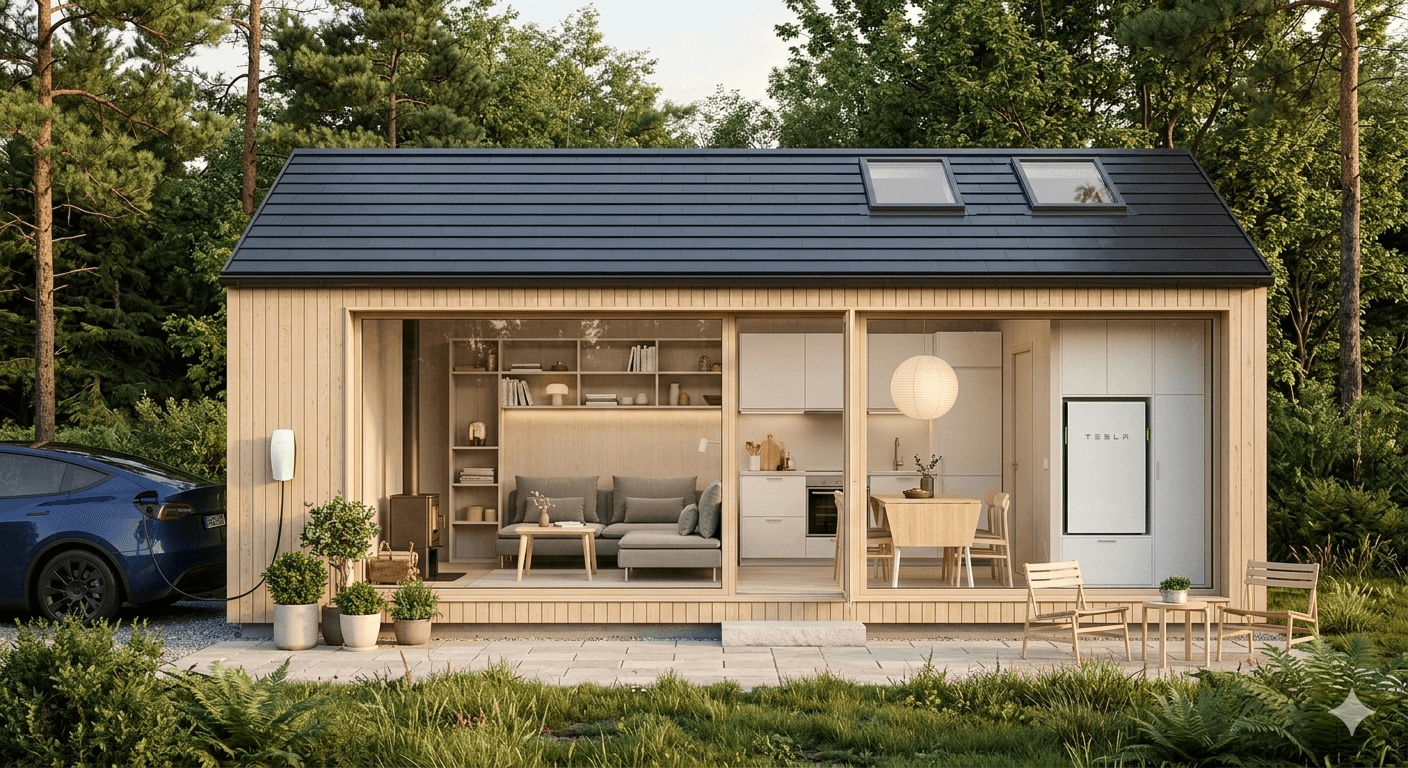
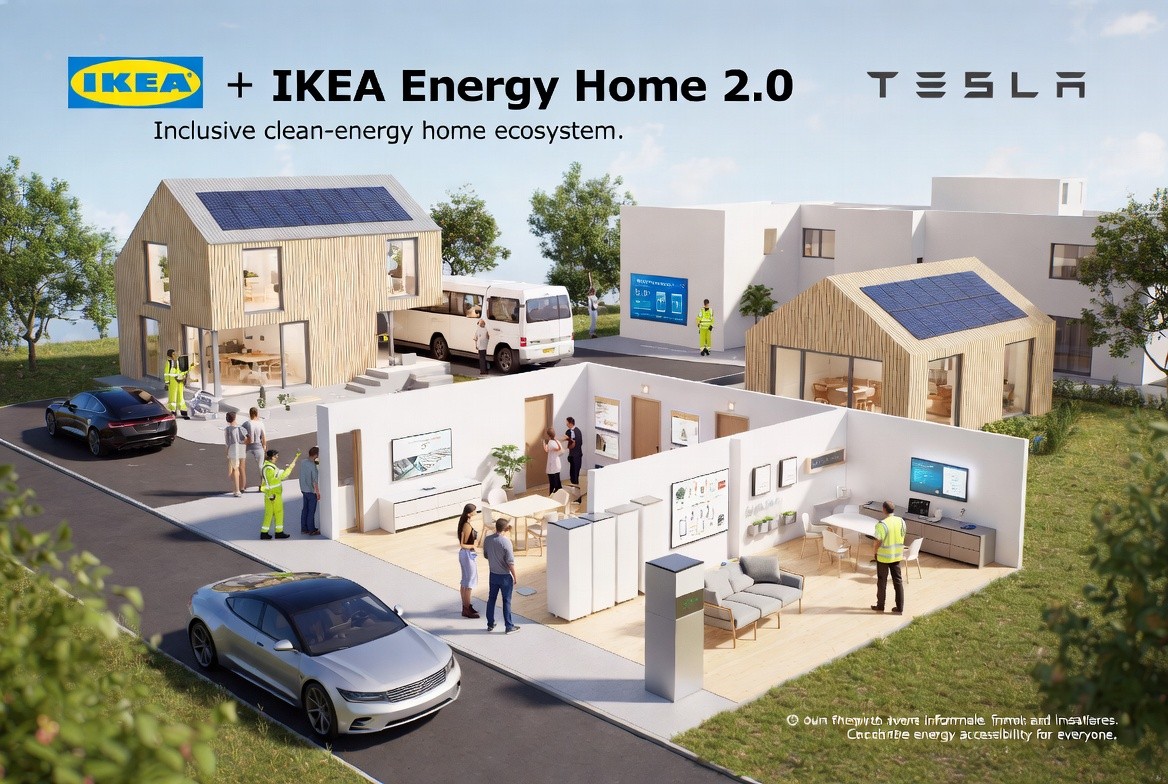
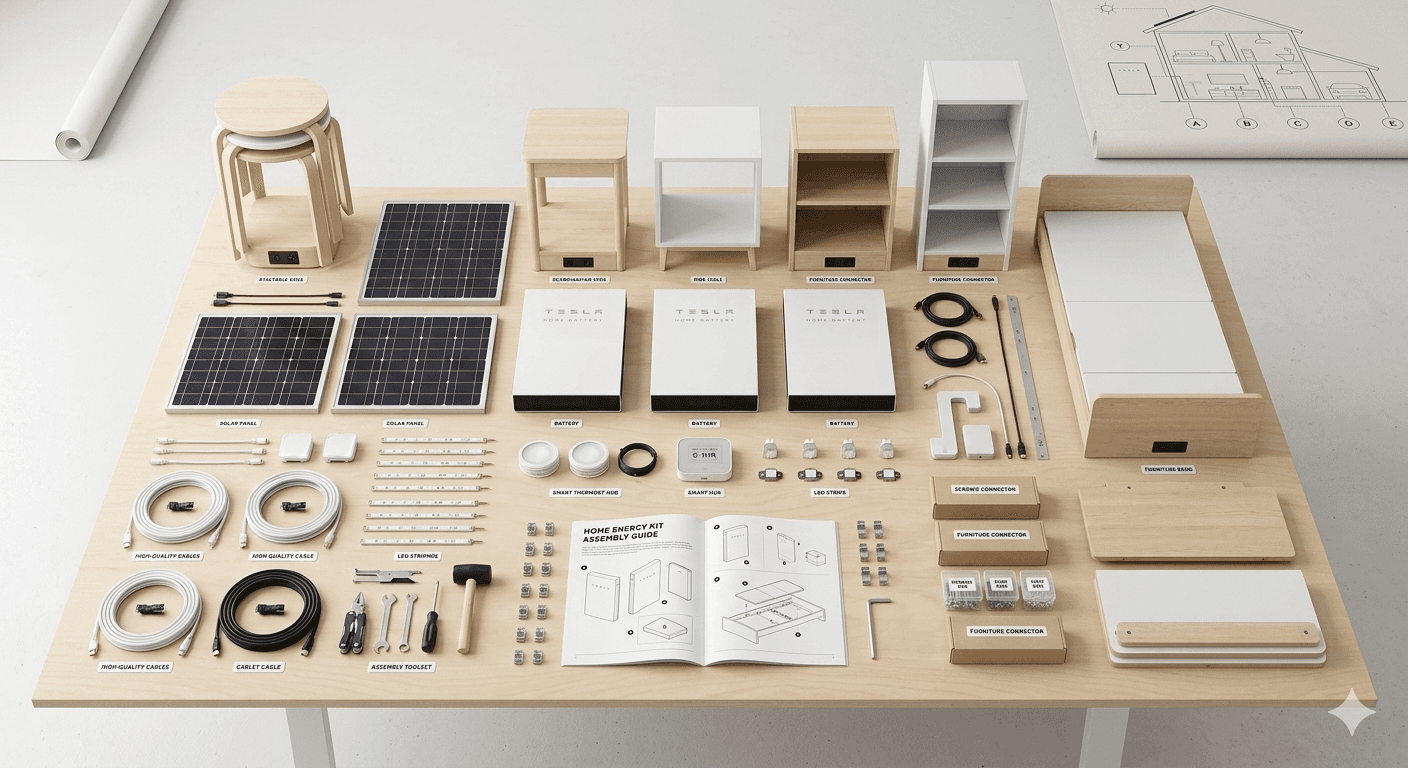
Tesla and IKEA collaborate to create a new home ecosystem that integrates energy infrastructure into everyday living.
The concept includes:
• Tesla Wall Connector home charging
• Energy planning tools
• Powerwall battery storage
• IKEA showroom installations
• residential solar starter kits
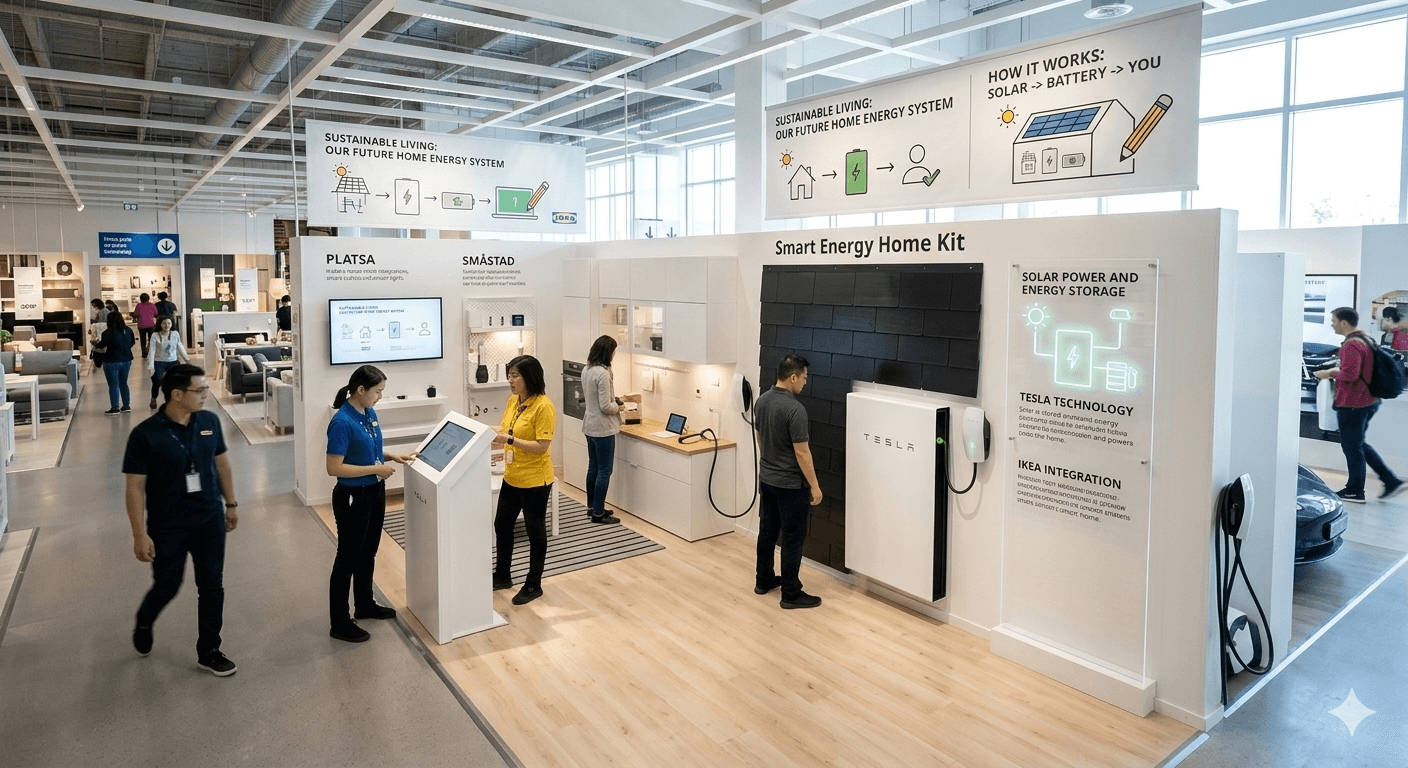
Inside IKEA stores, customers can experience a Smart Energy Home Kit where clean energy systems are presented alongside furniture and home layouts.
Instead of visiting specialized energy installers, customers can explore the system within a familiar retail environment.
Concept
Tesla × IKEA
1 Week 2026
This project explores a speculative Tesla × IKEA partnership to integrate EV charging and clean energy into everyday homes. The challenge involved two phases: designing the partnership and evaluating its unintended consequences. Using collaborative analysis and the Bad Design Canvas, the concept was refined into a more responsible energy ecosyste
Design Strategy
Systems Thinking
Tesla × IKEA
1 Week 2026
This project explores a speculative Tesla × IKEA partnership to integrate EV charging and clean energy into everyday homes. The challenge involved two phases: designing the partnership and evaluating its unintended consequences. Using collaborative analysis and the Bad Design Canvas, the concept was refined into a more responsible energy ecosyste
Tesla
Tesla leads the electric vehicle and home energy industry through EVs, Powerwall batteries, and solar systems. Its mission centers on accelerating the transition to sustainable energy.
IKEA
IKEA is the world’s largest home furnishings retailer with a mission to make well-designed products accessible and affordable for everyday people
Tesla has advanced clean energy technology but limited mainstream distribution.
IKEA has global reach and trust in the home space but limited technological infrastructure products.
Together they could transform clean energy into a normal part of home design.
The biggest barrier to EV adoption is not the vehicle itself it is the
complexity of home charging and energy infrastructure.
The opportunity was to make clean energy feel as simple as buying a kitchen or furniture system.
Solution
sustainable clean energy
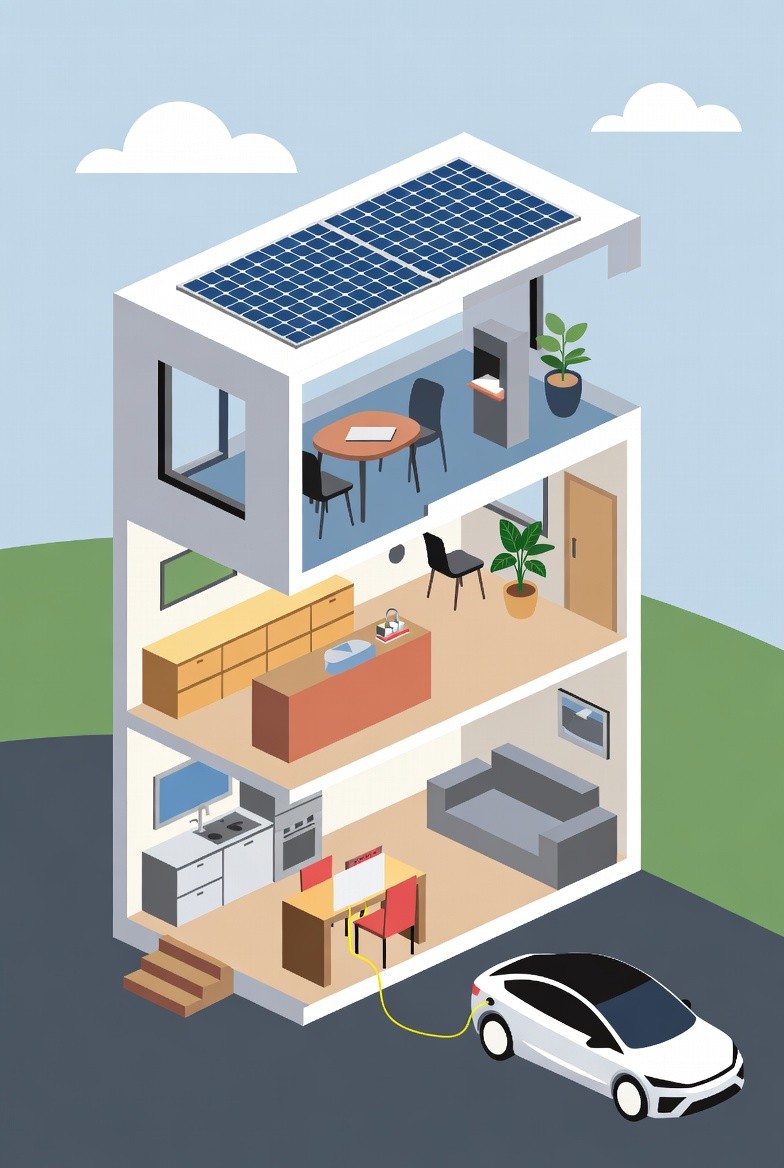
The result is a one-stop ecosystem for clean energy adoption.
01
Discover
Amplifying Your Impact
Customers encounter Electric Home displays inside IKEA showrooms, demonstrating how energy infrastructure integrates into daily living.
Whether you’re launching a new product, managing a crisis, or building your brand’s narrative, we craft stories that captivate, influence, and resonate with your audience.
02
Plan
A co-developed Energy Planner app analyzes the customer’s home electrical setup and EV usage.
03
Purchase
Customers select a bundled system with transparent pricing and installation included.
04
Install
Installation is coordinated through IKEA’s home services network and certified electricians.
Evaluating Unintended Consequences
Consequences
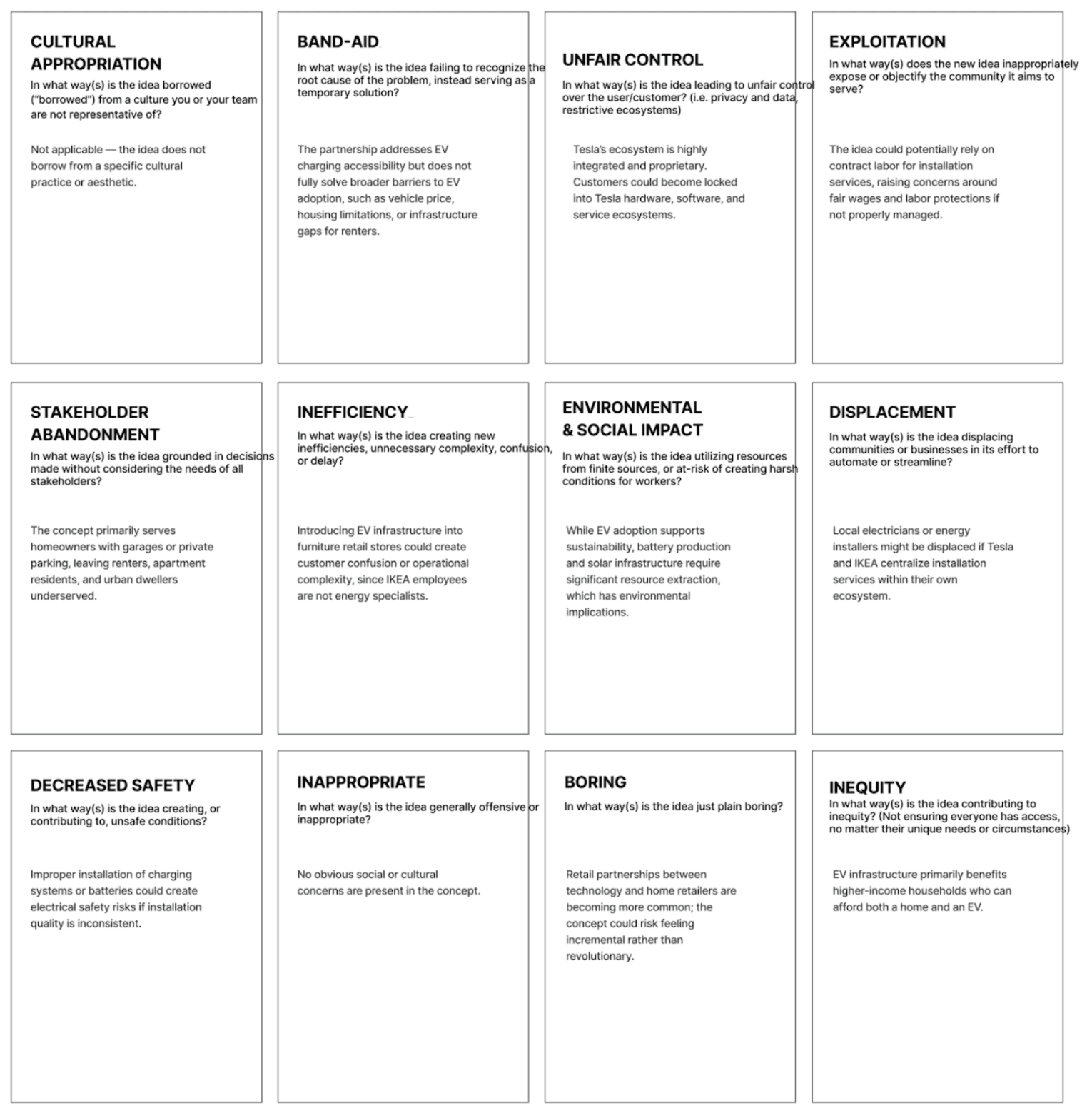
After developing the concept, we analyzed the idea using the Bad Design Canvas, identifying potential ethical and systemic risks.
The canvas evaluated issues such as: • inequity in access to EV infrastructure • hidden costs like electrical panel upgrades • gig-economy labor risks for installers • environmental impact of battery production • displacement of local installers
This step revealed that the original concept could reinforce inequalities or create new risks if implemented irresponsibly.
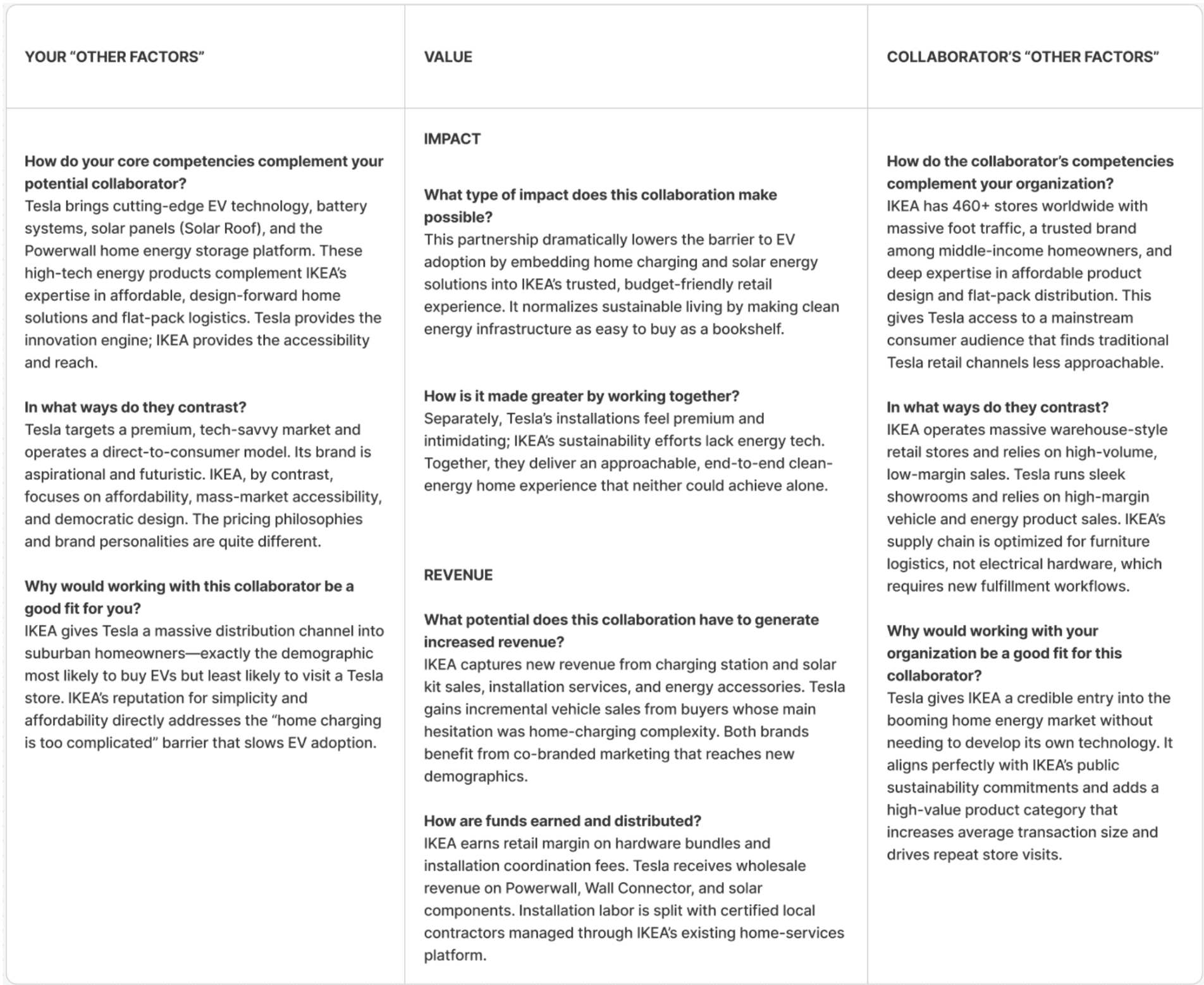
Business Value
For Tesla
For Tesla
• Access to mainstream consumer markets
• Distribution through 460+ global IKEA stores
• Increased adoption of home charging systems
• Access to mainstream consumer markets
• Distribution through 460+ global IKEA stores
• Increased adoption of home charging systems
For IKEA
For IKEA
• Entry into the rapidly growing home energy market
• Expansion of the smart home category
• Increased store visits and higher-value purchases
For Consumers
For Consumers
• Simplified clean energy adoption
• Transparent pricing
• integrated home infrastructure
Synthesis & Insight
Participation Generated Energy
Ideas centered around action — playing, guessing, singing, remixing — consistently felt more socially compelling than ideas centered around passive access.
Discovery Was Not the Primary Gap
While many concepts enhanced personalization, they did little to address the emotional isolation of solo listening.
Music Culture Is Ritualistic and Interactive
From trivia nights to karaoke to jam circles, music has historically functioned as a participatory activity. Streaming removed the interaction layer but not the desire for it.
Low-Friction Social Moments Outperformed Heavy Social Infrastructure
Concepts that enabled quick, spontaneous interaction resonated more than those requiring long-term commitment or coordination.
Overview of top solution
Integrated Playful Social Hub:
A top-toggle "Community" in Spotify enabling musical games + trivia, karaoke duets, and live jam sessions to combat listener isolation through spontaneous, shared musical play.
Play (Spotify + Games)
Audio-based trivia, music guessing challenges
Sing (Karaoke)
Duets, vocal collabs, community performances
Create (Jam Sessions)
Real-time co-creation spaces with artist-listener matchmaking
Our Revised Concept Summary
Our Revised Concept Summary
We iterated our “IKEA Smart Home” concept based on Prof Manos’ feedback and also to preserve the original’s core strength: which is leveraging IKEA’s reach and Tesla’s technology to make clean energy accessible, while making approx five of the structural changes on the Bad Design canvas:
We think our changes don’t weaken the commercial proposition, they strengthen it. Equity provisions expand the addressable market. Transparency reduces returns and negative reviews. Safety investment prevents catastrophic liability. Open ecosystem choice builds consumer trust, and community integration generates goodwill that traditional marketing cannot buy.
Equity by design:
An “Energy for All” tier would ensure that low-income households, renters, and apartment dwellers benefit from the partnership (not just affluent homeowners!)
Cost transparency:
A mandatory “Home Readiness Check” would disclose all prerequisite costs before purchase, including electrical panel upgrades and permit fees. No hidden costs!!!
Safety-first installation:
A “Preferred Installer Network” replaces the gig-contractor model, requiring specific licensing, joint Tesla-IKEA safety certification, and employee-grade benefits for all workers.
Open ecosystem choice:
At least one non-proprietary charger option is offered alongside Tesla products, and all customer data is explicitly owned by the customer with a clear privacy policy.
Community over competition
Local installers and independent solar businesses are integrated as partners through referral pipelines and a “Preferred Installer Network” rather than displaced by IKEA’s scale.
Final Concept
IKEA Smart Home Energy Ecosystem
The project demonstrates how luxury brands can expand without sacrificing their core identity. By shifting from product innovation to experience design, Vera Wang could deepen its role in the lives of brides while preserving the symbolic value that makes couture meaningful.
More broadly, the work highlights a principle relevant across luxury industries:
Key Takeaways
Key Takeaways
Systems thinking matters
Designing partnerships requires understanding ecosystems, not just products.
Responsible innovation is iterative
Designing partnerships requires understanding ecosystems, not just products.
Accessibility drives adoption
Clean energy becomes mainstream when it integrates into everyday life.
The result is a one-stop ecosystem for clean energy adoption.
Synthesis & Insight
Participation Generated Energy
Ideas centered around action — playing, guessing, singing, remixing — consistently felt more socially compelling than ideas centered around passive access.
Discovery Was Not the Primary Gap
While many concepts enhanced personalization, they did little to address the emotional isolation of solo listening.
Music Culture Is Ritualistic and Interactive
From trivia nights to karaoke to jam circles, music has historically functioned as a participatory activity. Streaming removed the interaction layer but not the desire for it.
Low-Friction Social Moments Outperformed Heavy Social Infrastructure
Concepts that enabled quick, spontaneous interaction resonated more than those requiring long-term commitment or coordination.
Overview of top solution
Integrated Playful Social Hub:
A top-toggle "Community" in Spotify enabling musical games + trivia, karaoke duets, and live jam sessions to combat listener isolation through spontaneous, shared musical play.
Play (Spotify + Games)
Audio-based trivia, music guessing challenges
Sing (Karaoke)
Duets, vocal collabs, community performances
Create (Jam Sessions)
Real-time co-creation spaces with artist-listener matchmaking


Get in Touch
Interested in collaborating or connecting? Always happy to talk design, fashion, tech, or startups—ideally over coffee or matcha.


Get in Touch
Interested in collaborating or connecting? Always happy to talk design, fashion, tech, or startups—ideally over coffee or matcha.
Get in Touch
Interested in collaborating or connecting? Always happy to talk design, fashion, tech, or startups—ideally over coffee or matcha.